
Border park Kalmthoutse Heide

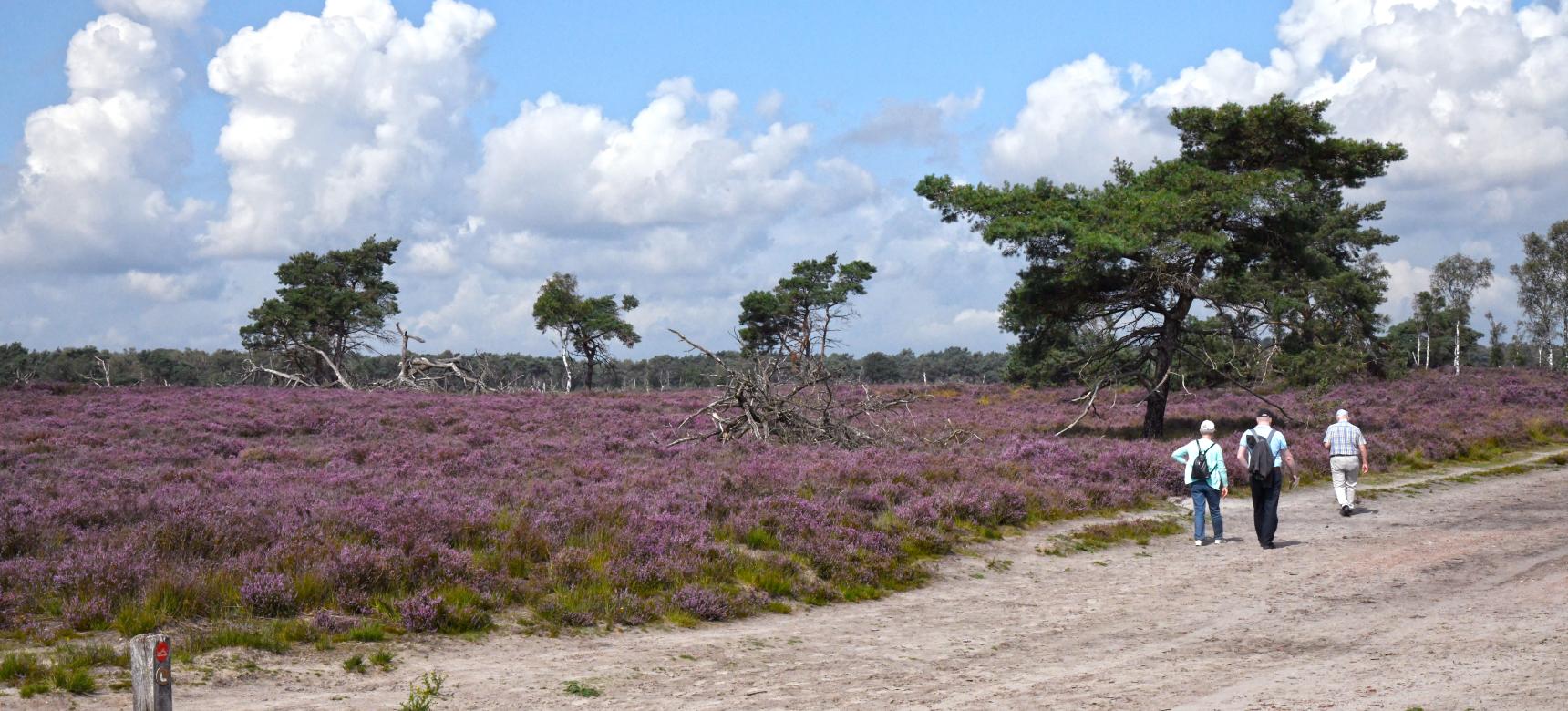
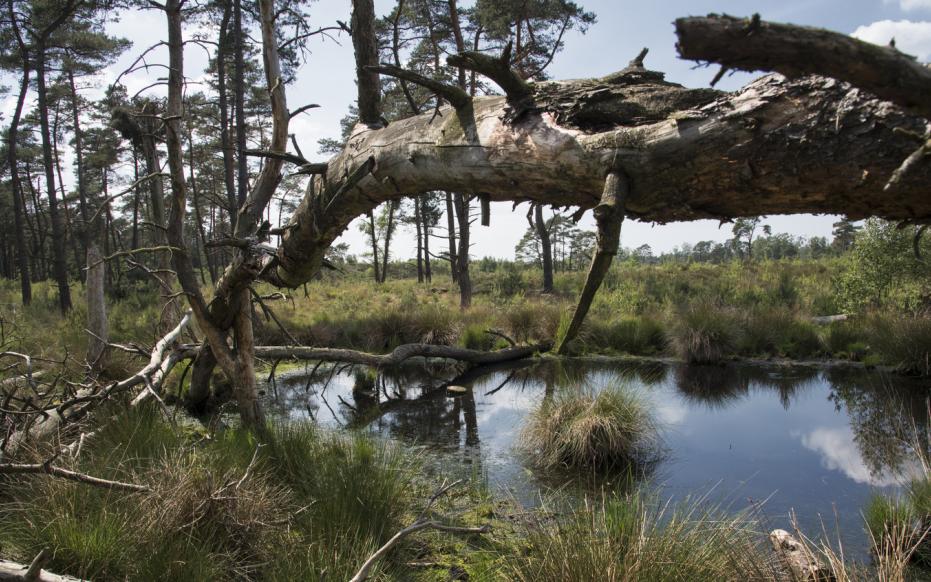
Enjoy the stunning landscapes of Border Park Kalmthoutse Heide. This cross-border nature park and geosite offers a mosaic of heathlands, dunes, peat bogs, forests, and meadows. Birds such as the woodlark, nightjar, and black woodpecker breed here, and rare plant species thrive throughout the area.

At the Sustainable Education Centre De Vroente, you can take part in the educational programme Tijdgravers (“Time Diggers”).

51.396724526524, 4.42813505

Kalmthoutse Heide, Kriekelareduinen (gemaakt door Ed Kil)

Things to do

  • Follow one of the many walking and cycling routes, including the popular Dune Trail and the Butterfly Trail, specially designed for visitors with visual impairments.
  • Spot rare birds such as the nightjar and woodlark, or admire the blooming heathlands in August and September.
  • Visit De Vroente, the Sustainable Education Centre, for exhibitions and information about the area’s unique geology and ecology.
  • As a three-star silence area, the park is an ideal place for relaxation and meditation.
Kalmthoutse heide Kriekelareduinen

Practical information

  • Location: Situated on the border between the Netherlands (North Brabant) and Belgium (Antwerp), with access points in Kalmthout, Essen, Putte, and Ossendrecht.
  • Many trails are suitable for wheelchairs and strollers; accessible facilities such as the Butterfly Trail and all-terrain wheelchairs are available at De Vroente.
  • Dogs on a leash are welcome outside grazing and resting areas; a designated dog zone is located near De Vroente.
  • For up-to-date information on routes and activities, visit the official website.

What this place tells us about the Geopark

Border Park Kalmthoutse Heide is living proof of the dynamic relationship between nature and people in the Scheldt Delta. The alternation of sandy heathlands and clay-rich polders reveals the geological transition between the Kempen and the coastal plain. The Brabantse Wal, with its striking escarpment, marks this boundary and influences the water flows between the Meuse and Scheldt basins. Historical use of the area for peat extraction, clay digging, and military purposes has also shaped the landscape. Today, the park stands as an example of cross-border cooperation in nature conservation and education, fully in line with the vision of Geopark Schelde Delta.